
Our Latest Articles
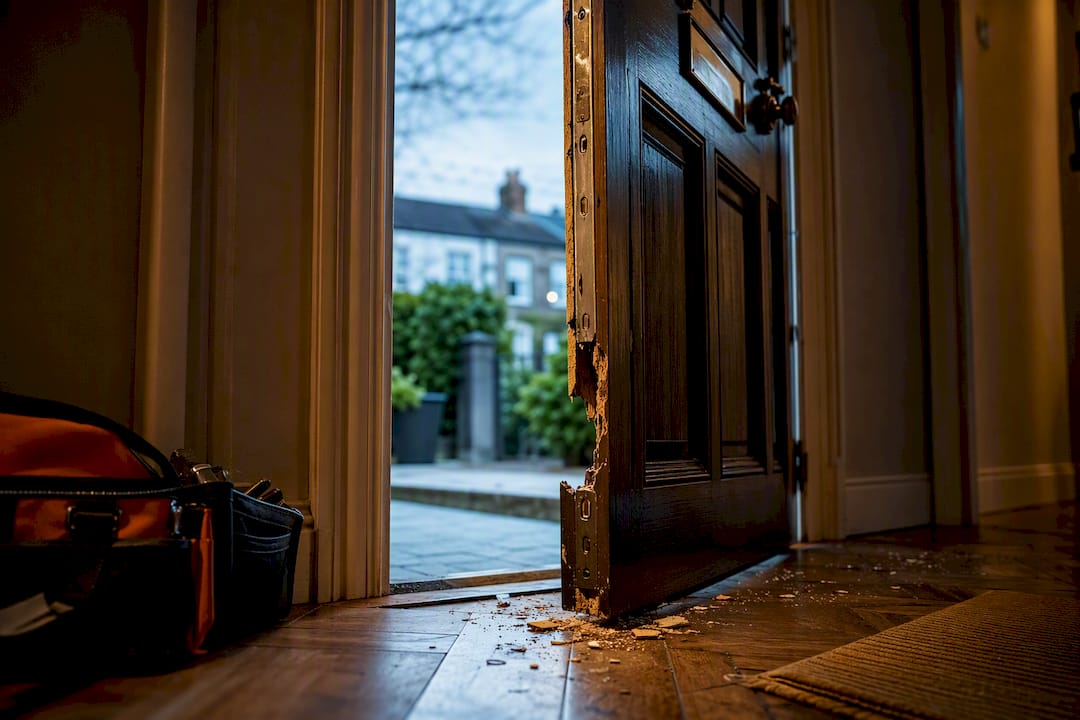
First hour after a home break-in for Irish homeowners: secure, document, recover
Check you are safe first, then leave or stay away if anyone might still be inside, and call 999 or 112 straight away. Once it is clear, ring the Gardaí on their non-emergency line to get a case number, avoid touching anything, photograph the scene before tidying, and call your insurer before you start any repairs.
TL;DR:
- Securing your home immediately with boarding and temporary locks can prevent a second intrusion and is often reimbursed by insurance if receipts are kept.
- Most forced entries occur through front doors or ground-floor windows, making reinforced locks and strike-plate screws a cost-effective first upgrade.
- Photographs and detailed documentation of damage and stolen items are essential for insurance claims and should include serial numbers and supporting receipts.
- Calling a professional locksmith promptly is crucial for temporary security fixes, ensuring they provide a written estimate, ID, and warranty before work begins.
- Emotional recovery involves practical steps like staying with someone, rebuilding routines, and seeking support, as feelings of fear and anxiety are normal after a break-in.
Table of Contents
- What should you do in the first hour after a break-in home discovery?
- How do you document the scene for an insurance claim?
- How do you secure your property right away?
- What security upgrades matter most after a break-in?
- When should you call an emergency locksmith?
- How do you cope emotionally after a break-in?
- How can you support someone who has been burgled?
- A locksmith’s view: what actually matters first
- How ECS Locksmiths can help after a break-in
- Where to go for further help
- Sources
What should you do in the first hour after a break-in home discovery?
If there is any chance the intruder is still inside, do not go in. Leave the way you came, get to a neighbour’s house or lock yourself in the car, and call 999 or 112 immediately. Never search the house yourself to “check” if it feels empty. That instinct gets people hurt.
If you’re confident the property is clear, follow these steps in order:
- Call the Gardaí’s non-emergency number and ask for officers to attend. Give a clear, brief account of what you found and when.
- Ask for and write down the case or incident number before the call ends. You’ll need this for your insurer and for any follow-up enquiries.
- Leave everything untouched. Don’t clean up broken glass, don’t shut open drawers, don’t move furniture.
- Note the time you discovered the break-in and anything obvious about how entry was made, a smashed window, a forced door, a broken lock.
- Have your address, a description of what’s missing or damaged, and your contact number ready when the Gardaí arrive.
How do you document the scene for an insurance claim?
Photographs win or lose claims. Take wide shots of every damaged door, window or frame, then close-ups of the actual break point, splintered wood, a bent lock barrel, a cracked pane. Photograph any storage that’s been emptied out, jewellery boxes, drawers, safes, exactly as you found them.
From there, build your paper trail:
- List every stolen or damaged item with an approximate value.
- Note serial numbers for electronics, tools or bikes where you have them (check old boxes, receipts or manuals).
- Dig out purchase receipts or bank statements showing when items were bought.
- Photograph the item list itself alongside any supporting paperwork.
Pro Tip: Insurers commonly ask for the police case number before they’ll process a theft claim, so get it from the Gardaí during their first visit rather than chasing it up later.
Keep every receipt for emergency repairs too. Most policies will reimburse reasonable emergency expenses, but check your excess before deciding whether a claim is even worth filing. On a low-value break-in, the excess can wipe out most of the payout.
How do you secure your property right away?
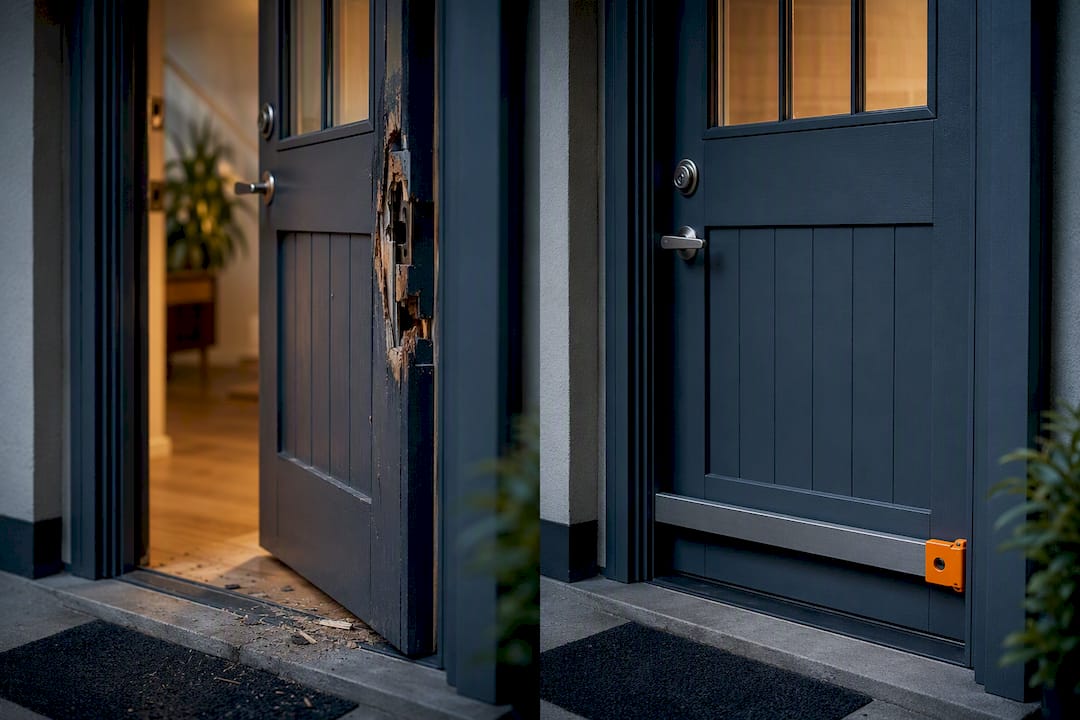
A broken door or smashed window left overnight is an invitation for a second visit. Board up glass panels with plywood or thick cardboard as a stopgap, and fit a temporary bolt or bar across a damaged door until it can be properly repaired.
Practical short-term moves:
- Board broken windows and damaged door panels immediately, even a rough job beats an open gap.
- Fit a temporary lock, bolt or security bar if the main lock is damaged or missing.
- Keep every receipt from the emergency call-out or hardware run, as insurers often reimburse sensible emergency fixes.
- Call a professional rather than improvising if there’s structural damage to a frame, a door that no longer sits square, or any sign the property is still at risk.
DIY boarding is fine for a window pane. A door frame that’s been kicked off its hinges needs someone who can assess whether it’s safe to leave overnight at all.
What security upgrades matter most after a break-in?
Not every upgrade earns its cost. The front door and ground-floor windows account for most forced entries, so that’s where money and attention should go first.
Priority fixes, roughly in order of impact:
- Replace short strike-plate screws with 75mm screws that bite into the stud, not just the door frame. It’s one of the cheapest fixes that genuinely resists another kick-in attempt.
- Rekey or fully replace locks if keys were taken or you suspect a key was copied, half-measures here leave the same vulnerability open.
- Reinforce any frame or hinge that was forced, a repaired lock means little if the frame around it is still weak.
- Add motion-triggered exterior lighting and a visible camera or doorbell camera near the main entry point.
- Put up an alarm sticker even if you haven’t installed a full system yet, and mention the break-in to immediate neighbours so they keep an eye out.
Pro Tip: Security works best layered. Combining a stronger physical barrier with something that alerts you, a camera, an alarm, even a nosy neighbour, cuts repeat-victimisation risk far more than any single upgrade on its own, a pattern borne out in wider security research. A well-fitted reinforced door also holds up better against weather and wear, not just forced entry.
When should you call an emergency locksmith?
A competent locksmith arrives with one job in mind: seal the compromised entry point and stop a second break-in, not sell you the priciest hardware on the van. On first arrival, expect them to secure any open door or window, fit a temporary lock if the original is unusable, and talk you through rekeying versus full replacement.
Before you book, ask:
- For photo ID and a written estimate before work starts.
- What warranty covers the parts and labour.
- Their expected response time and whether they offer any satisfaction guarantee.
When you call, have ready: your police case number, a clear description of the damage, and instructions for safe access if you’re not home. That’s usually all a locksmith needs to get moving without a wasted trip.
How do you cope emotionally after a break-in?
Fear, disbelief and anger are normal reactions to a burglary, not signs you’re overreacting. Many people feel uneasy in their own home for weeks afterwards, even once the locks are fixed.
Small, practical steps help more than trying to “just get over it”:
- Stay with someone for the first night or two if being alone in the house feels wrong.
- Rebuild routine in stages, cook a normal dinner, sleep in your usual bed once you feel able to.
- Reclaim one room or area first rather than trying to feel fine about the whole house at once.
- Contact a victim support charity, your GP, or a counsellor if the unease, sleeplessness or anxiety hasn’t eased after a few weeks.
Fixing the locks matters for more than security. Regaining a sense of control over your own space is part of how people actually recover.
How can you support someone who has been burgled?
Show up with practical offers, not just sympathy. Say something like “I can drive you to the Garda station” or “let me help photograph the damage” rather than a vague “let me know if you need anything.”
- Offer concrete help: a lift to make the police report, a hand documenting the scene, or a spare room for the night.
- If they rent, tell them to document everything and notify the landlord in writing straight away, that protects their position on repairs and deposits.
- If they own the home, help them get a temporary fix sorted or sit with them while they call the insurer.
- Don’t post details on social media. Naming an empty house or announcing missing valuables publicly can make things worse, not better.
A locksmith’s view: what actually matters first
Cut through the noise and it’s four steps, in this order: safety, police, secure the entry point, then sort permanent repairs. Everything else, alarms, cameras, smart locks, comes after those four are settled…
— Barry
How ECS Locksmiths can help after a break-in
Ecslocksmiths is the practical option for Dublin homeowners who need a door secured tonight, not a quote next week. For situations like these, some locksmith services offer 24/7 call-outs for emergency entry, rekeying, full lock replacement, or broader security upgrades once the immediate danger has passed.
When you call, have your Garda case number, a description of the damage, and access instructions ready, that’s enough for the team to get moving without delay. Whether it’s a snapped strike plate or a door that needs a whole new lock system, Ecslocksmiths’ residential locksmith services cover the fix from the first call-out through to permanent repair. Check current availability and get a free estimate through the Locksmith Dublin page before you decide on next steps.
Where to go for further help
For anything beyond what’s covered here, these are worth bookmarking:
- Crime Victims Helpline (Ireland), for reporting steps and support services specific to Ireland.
- Victim Support, for emotional recovery guidance and what counts as a normal reaction.
- Aviva’s break-in guidance, for insurer-standard steps on documentation and claims.
Each one answers a different part of the same problem, so it’s worth checking all three rather than just one.
Sources
What services do locksmiths in Ireland actually offer?
It’s more than just unlocking doors. Most locksmiths provide:
Emergency lockouts (home, car, business)
Lock repairs and replacements
Key cutting and rekeying
Security upgrades (e.g. anti-snap locks)
Car key replacement
How quickly can you respond to an emergency?
In emergency situations, typical arrival times should be at your location within 20-30 minutes. There are always professional locksmiths on standby, ready to handle any lockout or security emergency, ensuring safety is never compromised.
Can a lockmsith help with high-security locks and systems?
Absolutely! Most locksmiths specialise in advanced high-security lock systems, including electronic locks, biometric security, smart locks, and keyless entry systems. The should be trained in the latest security technologies, ensuring that they can provide the highest level of protection for your home, office, or vehicle. Ask for a free expert consultation to help you choose the right security system for your needs.
Will a locksmith provide a warranty on there services?
Yes, all locksmiths should stand by the quality of there work and offer a 100% satisfaction guarantee. Most would by default offer a warranty on all services, ensuring that you receive the best craftsmanship and long-lasting results.
Can a locksmith open Cars
Yes, most locksmiths are trained to open cars.
How quickly can a locksmith get to me in an emergency?
Most locksmiths in Ireland offer 24/7 emergency callouts and typically arrive within 15–60 minutes, depending on your location and traffic. In Dublin, response times can be as fast as 10–30 minutes, especially for emergency lockouts.
Can a locksmith open my door without damaging it?
Yes A professional locksmiths use non-destructive entry methods first. Drilling is usually a last resort, not the default approach.
If someone immediately suggests drilling without inspecting the lock, that’s a red flag.
How much does a locksmith cost?
Costs vary depending on the service, time of day, and complexity of the job. A standard lockout is usually cheaper than replacing a lock. Emergency or late-night services may cost more.
Prices vary, but here’s a realistic guide:
Standard callout/labour: €85–€95
Lockout service: from ~€85–€120+
Lock replacement: depends on parts + labour
Important: Always ask for a full quote upfront and if there is a call out fee. Some companies advertise low prices but increase costs after arriving.
Prices can vary quite a bit… call around for quotes!
Can you make a key without the original?
Yes A professional locksmiths use non-destructive methods whenever possible. Damage usually only happens if the lock is faulty, high-security, or has already been tampered with.
Do locksmiths in Ireland need to be licensed?
Yes. In Ireland, all locksmiths must be licensed by the Private Security Authority (PSA).
If you’re hiring someone:
Ask for their PSA licence number
Avoid anyone who can’t prove credentials
By asking for the licence you avoid the scammers.
Providing Locksmith Services For More Than 30 Years in Dublin, lock outs, lock fitting, slam locks, car opening, commerical and domestic.


Quick Links
Home
About Us
Services
Testimonial
Faqs
Legal
Privacy Policy
Terms & Conditions